
Lens Mount Identification Guide
It takes many years of experience to be able to identify which lens fits what - without having to try it on every camera within reach to figure it out.
If you've come across a lens and you're not sure what mount it fits, I have put together this quick guide on identifying the most common lens mounts.
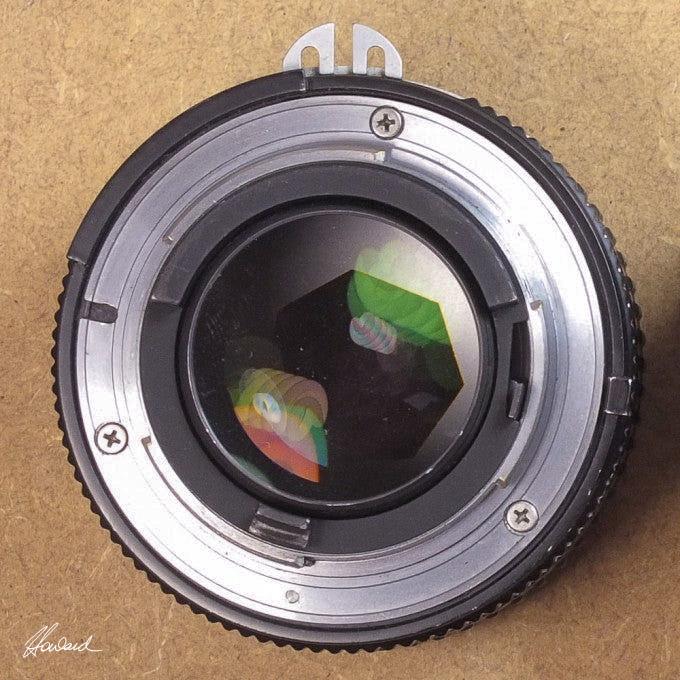
Nikon F
The design of Nikon’s SLR lens mount is has remained the same since the introduction of the first Nikon SLR - the F - in 1959. The intention was that any Nikon SLR lens fits any Nikon SLR camera. But it’s not quite happened that way in practise.
Early lenses (before 1977) won’t fit on most modern DSLR cameras, nor will they fit many Nikon film bodies unless they have a specific feature that allows it. These older lenses can be retrofitted with a newer mount to enable compatibility. AF-D lenses will fit just fine on any camera, but won’t autofocus unless the camera has a built in motor. Modern “G” lenses will mount to, but aren't compatible with, older manual cameras.
To find out more about which lenses are compatible with which cameras, visit Ken Rockwell's site on the link below.
Nikon Non-Ai
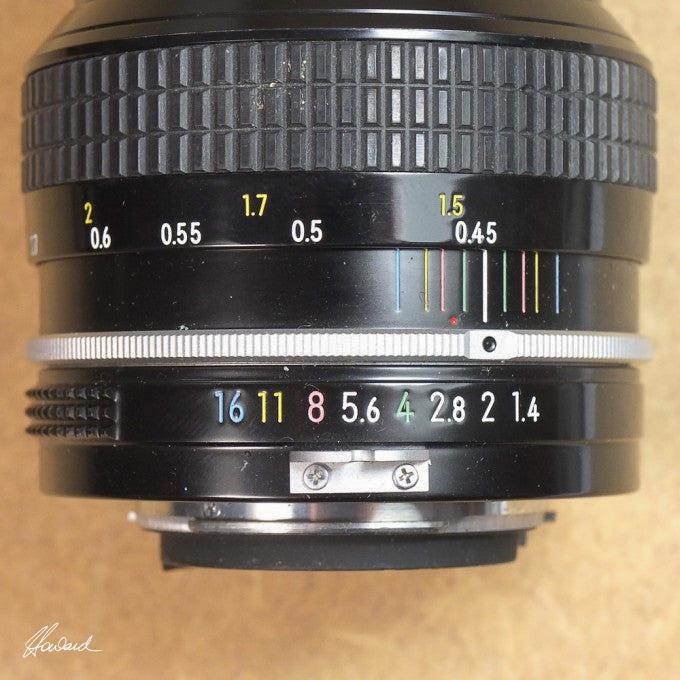
The earliest Nikon SLR lens mount.
A Non-Ai lens almost always has solid rabbit ears without cutouts. A Non-Ai lens will have a completely smooth edge around the lens mount, underneath the aperture numbers - unlike the Ai lenses which have a ridge or notch cut into the aperture ring.
There is also an absence of smaller aperture scale below the main number
Nikon Ai
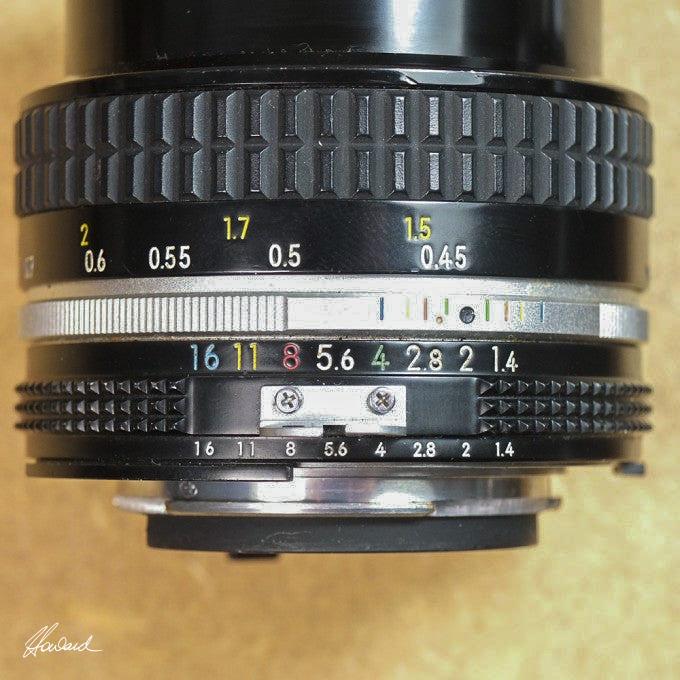
Nikon Ai is the post-1977 manual focus Nikon SLR lens mount. These lenses generally offer the most compatibility with Nikon SLR cameras, both old and new.
Check the aperture ring of the lens for numbers in both larger and smaller lettering. This is indicative of a Nikon Ai or Ai-S lens – an Ai-S lens will have the smallest aperture number in orange (eg. f/22, f/32).
Another indicator is a small ridge around the lens mount, seen just underneath the smaller f/8 lettering in this photo. This is the Aperture Index (Ai) by which the mount type is named, and it communicates to the camera which aperture the lens is set to.
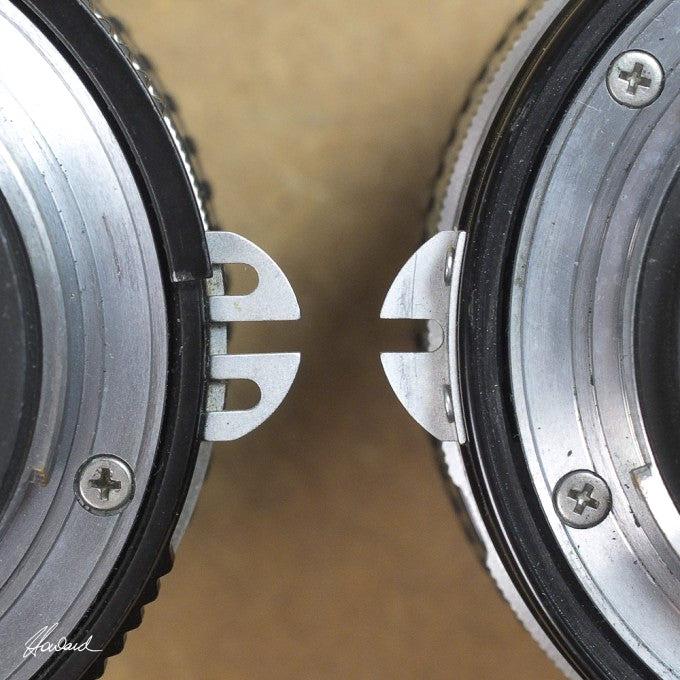
Nikon Ai
An easy way to visibly identify a Nikon Ai or Non-Ai mount lens is by looking for the ‘Rabbit Ears’. An Ai lens will have small cut-outs so that more light can fall on the smaller aperture lettering. A Non-Ai lens almost always has solid rabbit ears.
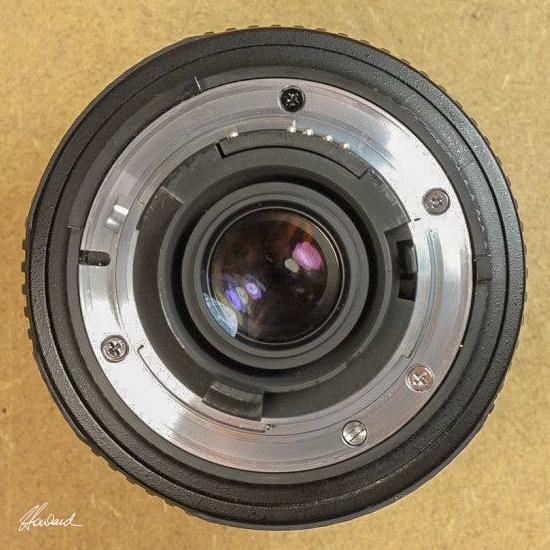
Nikon AF & AF-D
The first generation of Nikon Autofocus lenses, developed in the mid 1980s. These lenses are generally compatible with any film or digital Nikon body. Older film bodies and entry-level digital SLR bodies can use these lenses in manual focus mode.
At the mount: contacts for the electronics, small slotted screw which drives the autofocus.
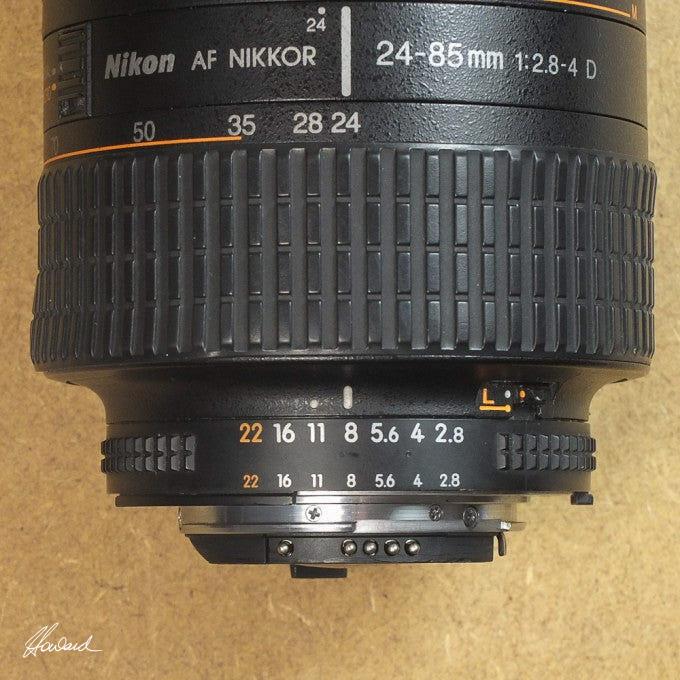
Nikon AF & AF-D
On the side: the AI numbering is all white except for f/22 which is in orange. The general colour scheme is black, white and orange. The AF-D lenses are almost always black bodied plastic construction.
Later AF-G lenses will completely lack a manual aperture ring, in favour of electronic aperture control. This renders them unusable on most film bodies.
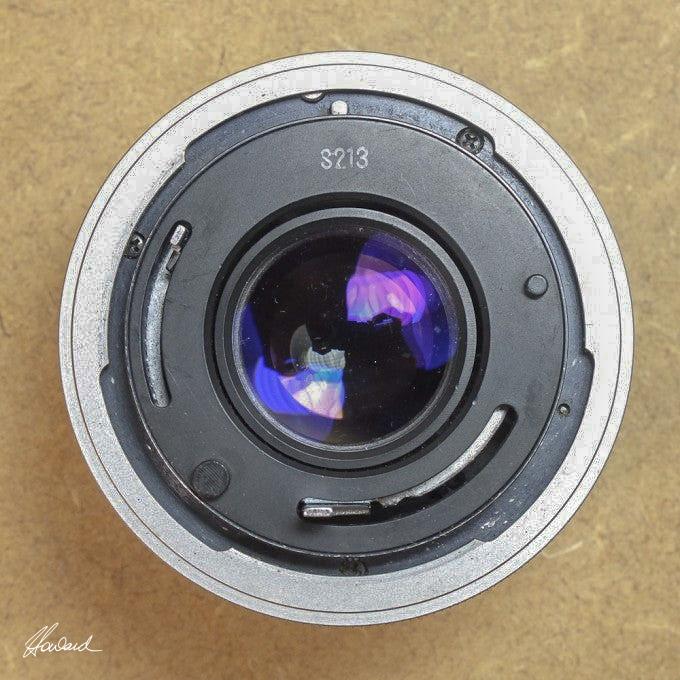
Canon FD
Canon changed its lens mount when introducing Autofocus lenses to the market. The older FD lenses are not compatible with newer cameras, and vice versa.
The older Breech-lock type lens mount usually found on earlier FD lenses. The entire silver ring rotates to attach the lens, whist the body and glass of the lens remains stationary – rather than rotating the lens to attach it to the camera as most modern lenses do.
Canon FD Breech-lock mount is easy to identify, as few other lenses have this rotating ring locking mechanism.
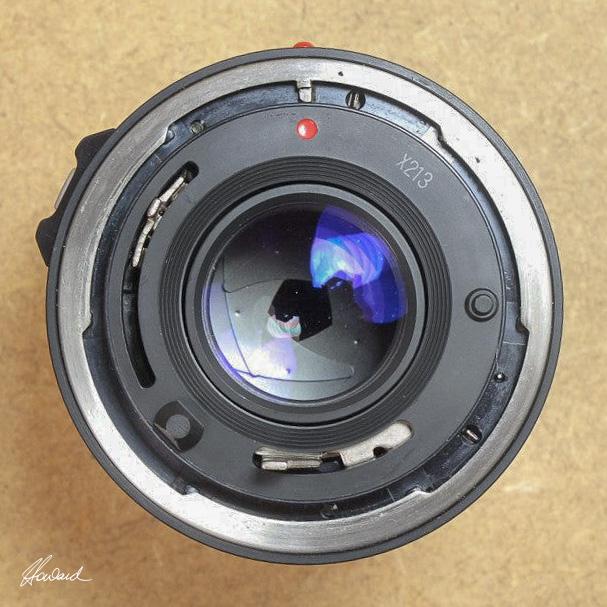
Canon 'New' FD
'New' FD is the name for later style Canon FD mount lenses.
Canon changed the mount to the more standard approach of rotating the entire lens to attach it to the camera, with a locking button. A red dot helps locate the mounting position, both at the rear and on the barrel of the lens.
The aperture cannot be moved or activated unless the lens is mounted to a camera.
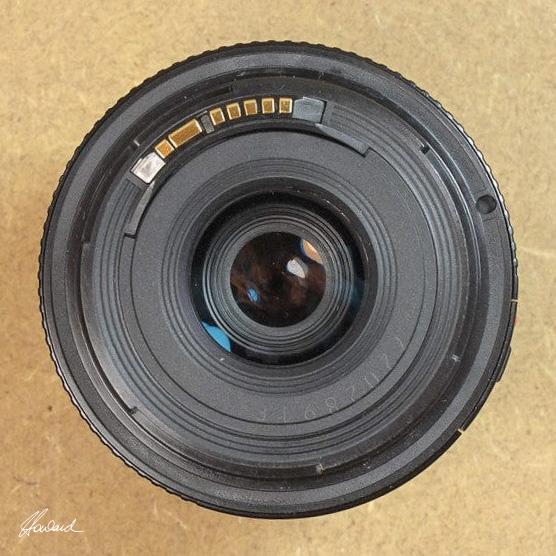
Canon EF / Canon EOS
Canon’s autofocus lenses, which their digital SLR cameras and more modern 35mm cameras use. The easiest way to determine the mount is to look at the contacts – they always remain visually identical. The aperture cannot be activated or controlled at all by physical controls on the lens. There is only a switch to control autofocus (and maybe IS). The rear of the lens can be plastic, as in this example, or metal.
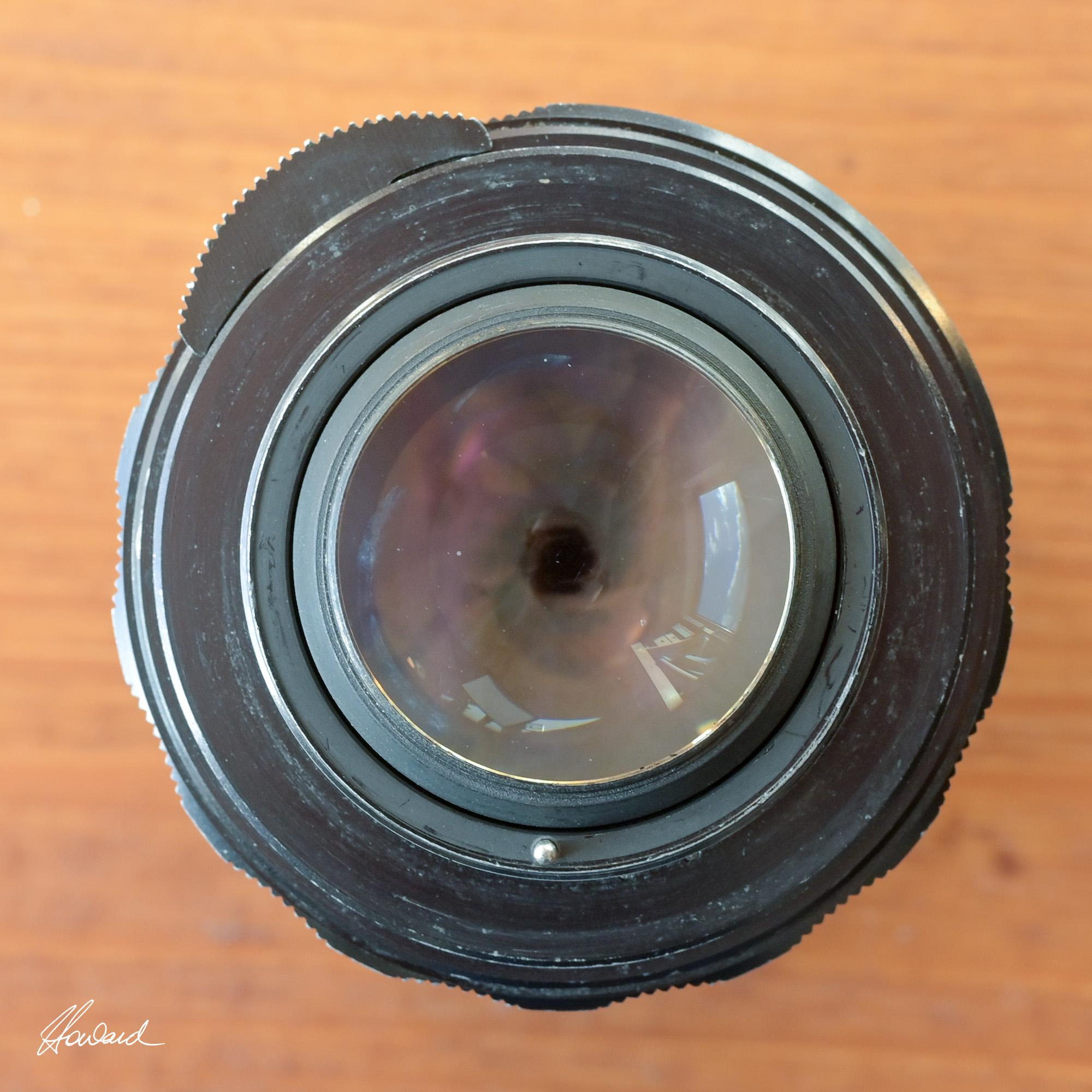
M42 Mount
One of the most common lens mounts. Also called Universal mount, or sometimes Pentax Screw Mount - M42 screw mount lenses simply screw on and off the camera with a male thread on the lenses, and female thread on the body. The “M42” refers to the size of the thread, as you might with nuts and bolts.
Easy to identify, there is usually an aperture pin located on the rear of the mount which will close the aperture down, although there are 'preset' lenses which don't have this.
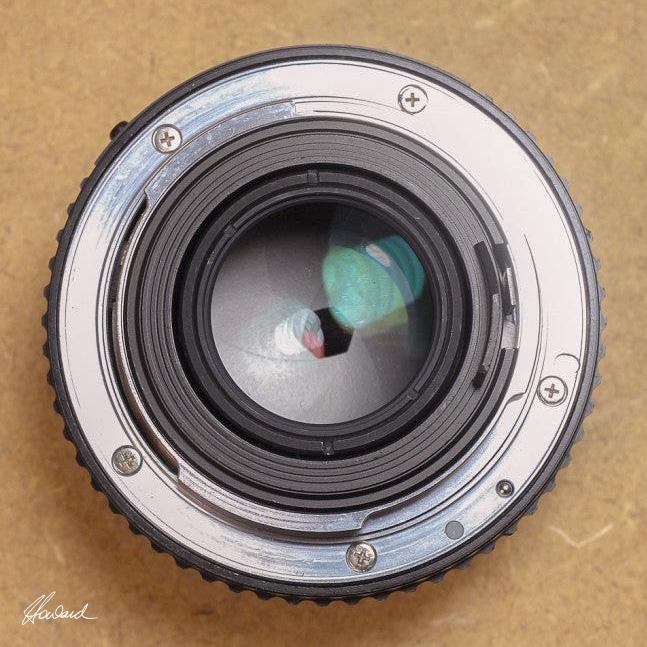
Pentax K
The Pentax K family of bayonet mount lenses has many variations. Like Nikon, the physical mount remains the same since it's introduction - and most Pentax K lenses will fit any Pentax K mount camera.
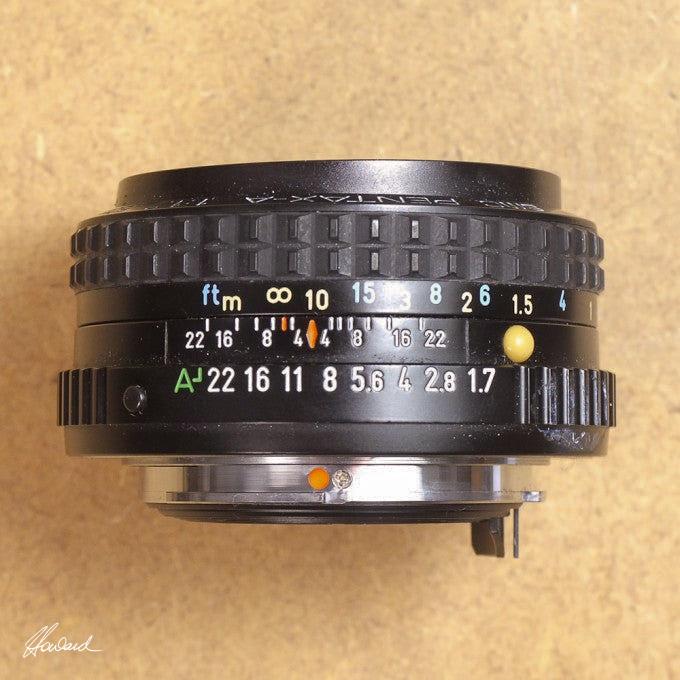
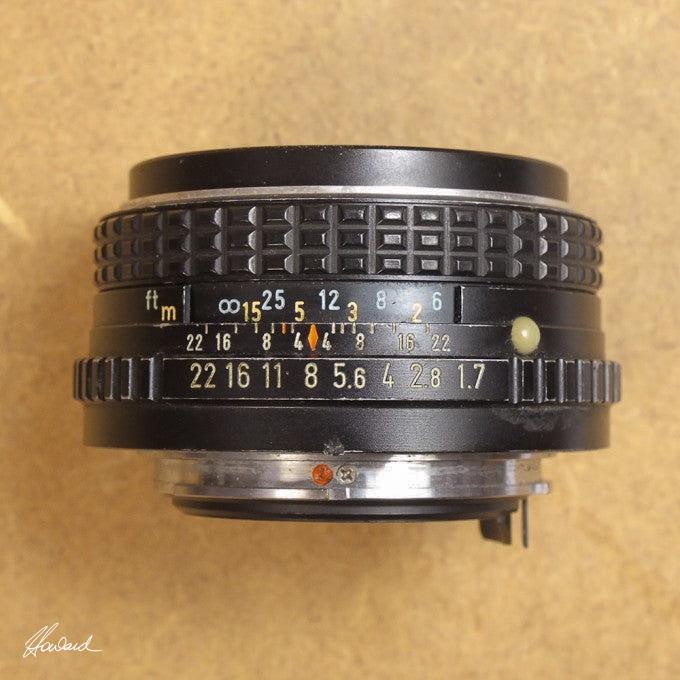
Visually, there are three bayonet mounting points, on the side of the lens there will usually be a yellow or white plastic dot, to aid with locating the position of the lens, and a protruding aperture lever from the rear, with a protective plastic part parallel with it.
Pentax PK-A
Pentax-A lenses have a green 'A-' setting on the aperture ring, and a small button to engage this. M lenses are usually metal, and A lenses tend to use plastic material in their construction.
The 'A' setting enables automatic operation of the aperture on compatible cameras, enabling Program Auto and Shutter Speed Priority exposure modes.
The name ring of a Pentax branded lens will state "Pentax-A"
Pentax-M
The earlier M lenses have no 'A' setting on the aperture ring. This means that they can only be used in the Manual or Aperture Priority exposure modes on cameras.
Pentax-M lenses lack the ability to be used with Program Auto, or Shutter Speed Priority mode. Camera bodies which feature these modes will not be able to use these functions with a Pentax-M lens.
The name ring of a Pentax branded lens will usually state "Pentax-M"
Minolta MD
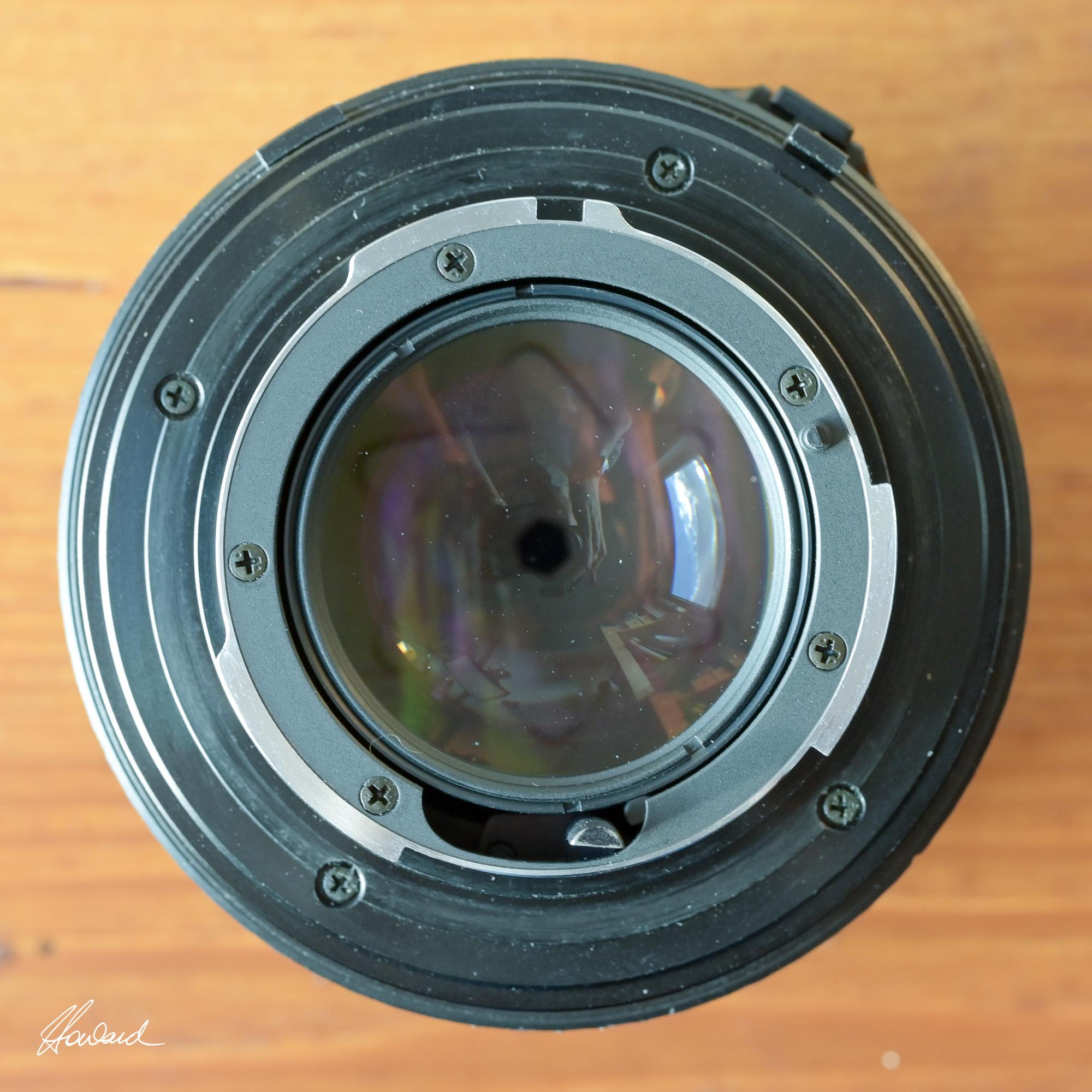
Minolta SLR cameras have two mounts – the older MD and later AF. Similar to Canon lenses, the two are not compatible with each other. An MD lens cannot be mounted on an AF camera, and vice versa.
The mount for the MD lenses is straightforward, with only an aperture control lever. There is a small notch cut out on the right hand side of one of the three bayonets.
There were some variations to MD lenses over the years, but the fundamental bayonet remains the same throughout the series.
Minolta AF
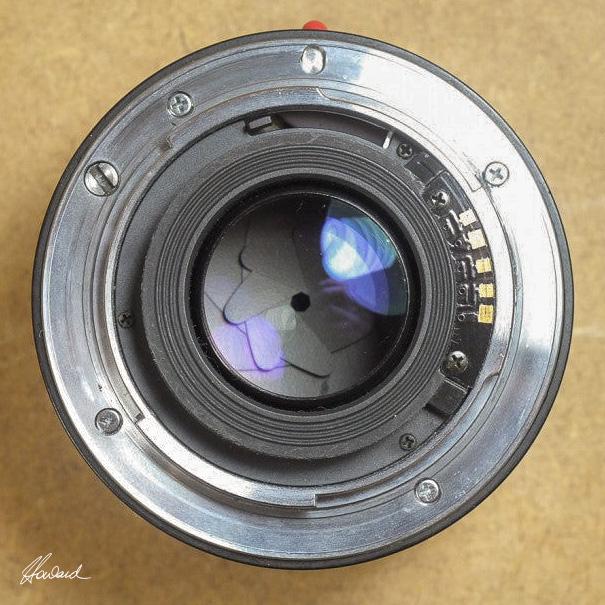
The Minolta AF lenses are shared with modern day Sony SLR cameras, after Sony bought the Minolta brand and patents.
The autofocus lenses are made of plastic or coated metal, and have no aperture controls on the lens itself. On the mount, the aperture lever for AF lenses is present but quite recessed. There are electronic contacts, and a red locating dot.
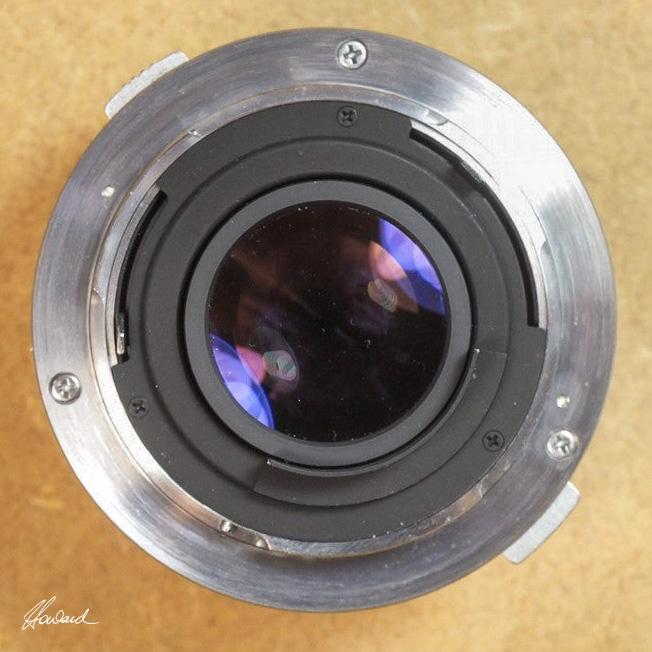
Olympus OM
This is an easy one. An OM mount lens will have two rectangular, spring loaded buttons directly opposite-ish each other. That’s the easiest way to visually identify an OM mount lens, as no other lens mount shares this. Any OM mount lens fits any Olympus OM camera with no problems.
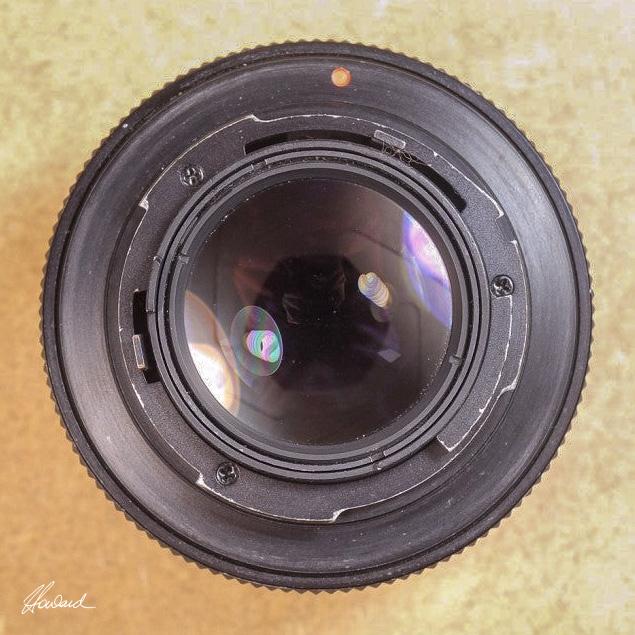
Contax / Yashica CY
Yashica SLR cameras, and Contax 35mm SLR cameras share the same lens mount. Zeiss lenses are intended for Contax cameras, and Yashica lenses are intended for Yashica cameras – but you can mix and match. To identify them visually, it’s a similar situation to Minolta MD lenses – look for the position of the notch cut out of one of the bayonets. On C/Y lenses, it’s on the left of the bayonet.
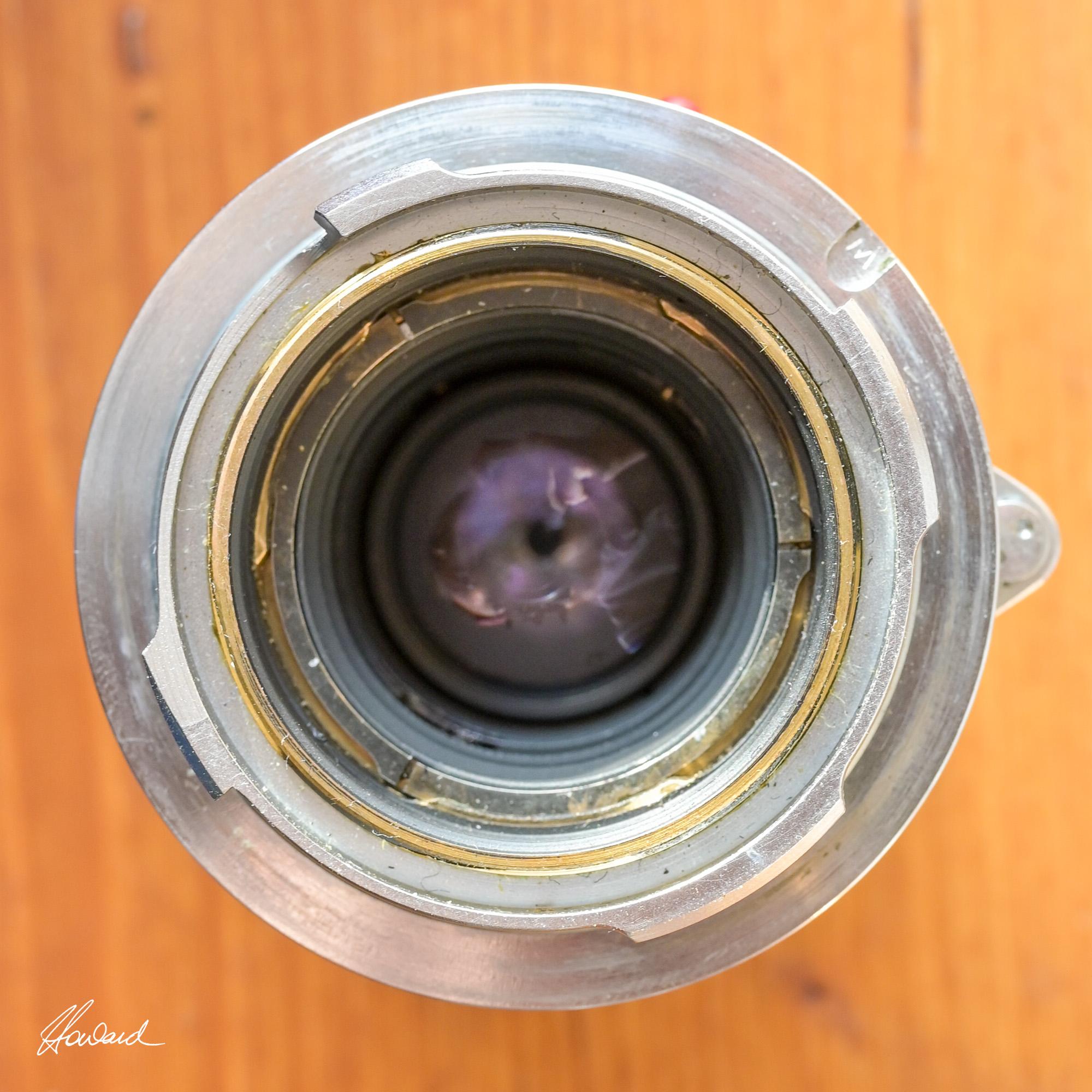
Leica-M Mount
The bayonet mount for Leica rangefinder cameras. The 'M' comes from "Meßsucher" - the German word for rangefinder.
There are four bayonet tabs at approximately 90-degree intervals around the mount. Usually, there is also a dot on the barrel of the lens to align with the camera body when changing lenses.
The design has remained relatively unchanged since 1954 and - with very few exceptions - any M lens should fit any M body.
The most recent variations carrying a basic form of coding, which gives compatible bodies a way of reading lens information to determine what type of lens is attached to the camera.
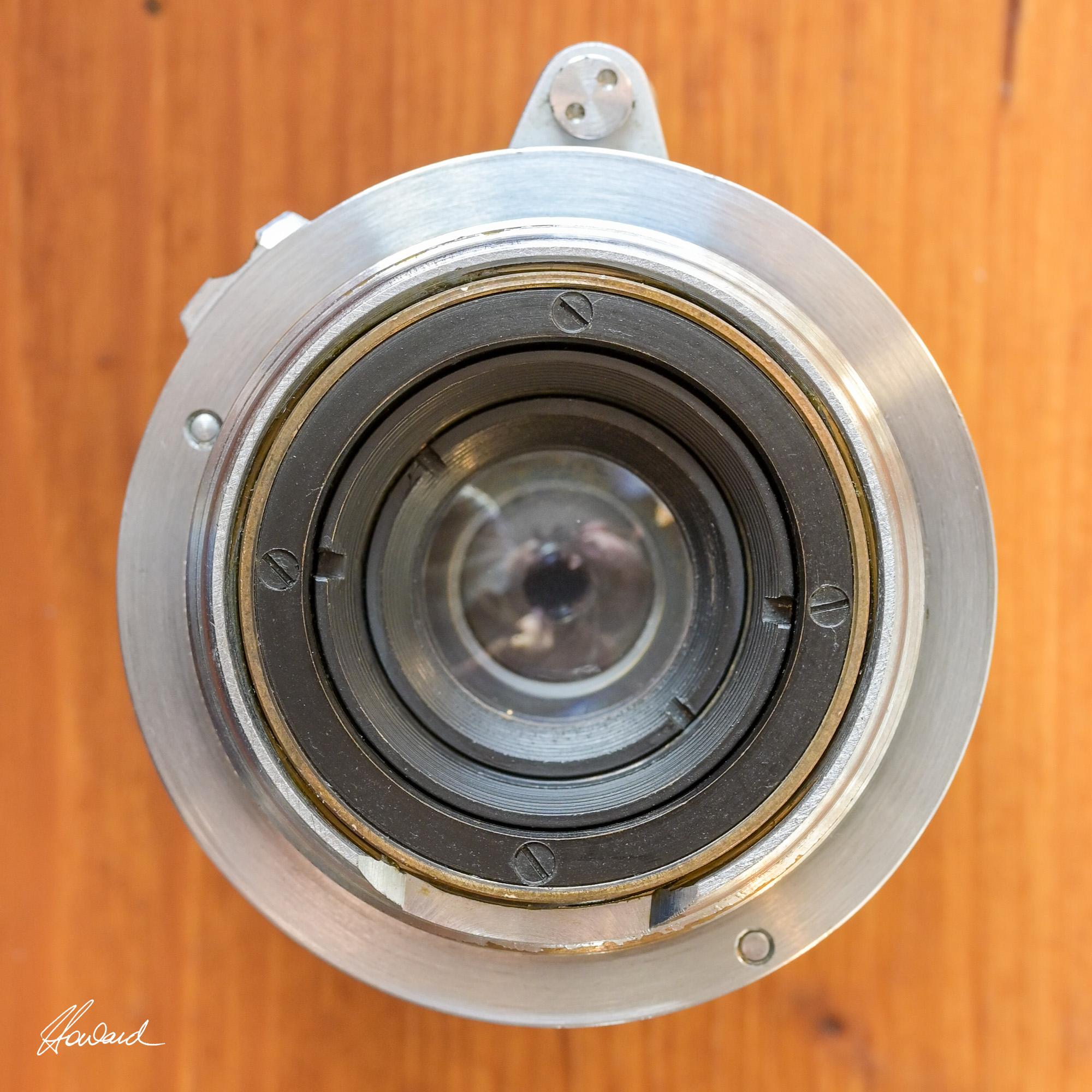
Leica Screw Mount
Also known as M39 or LTM (Leica Thread Mount).
This is the screw-type lens mount for earlier Leica rangefinder cameras. Widely used on Leica 'copies', such as Nicca, Leotax, Canon and others. It also appears frequently on enlarging lenses.
Similar to the M42 screw mount, the M39 refers to the diameter of the thread. Very simple design and easy to identify - usually with no other visible parts on the mount.
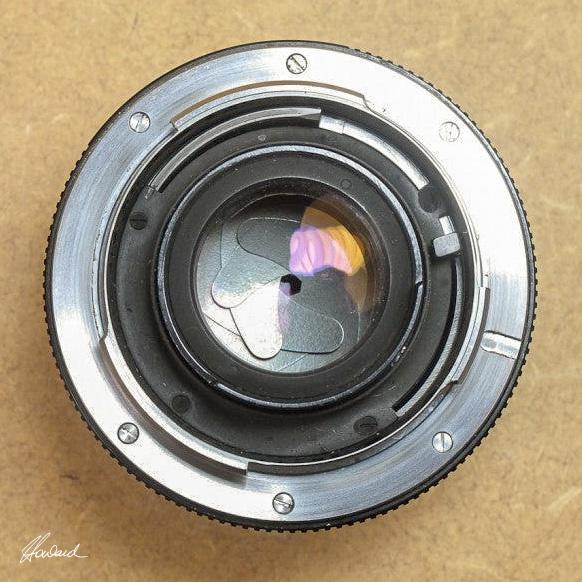
Leica-R Mount
Leica is usually associated with rangefinder cameras, but they also made some fine SLR cameras. The lenses are generally compatible across all models, although there are differently ‘cammed’ versions available, and the earliest versions don’t work on the latest cameras.
Almost all Leica-R lenses are Leica branded.
You can find a comprehensive guide to R lenses over at PhotoEhtnography. Link below.
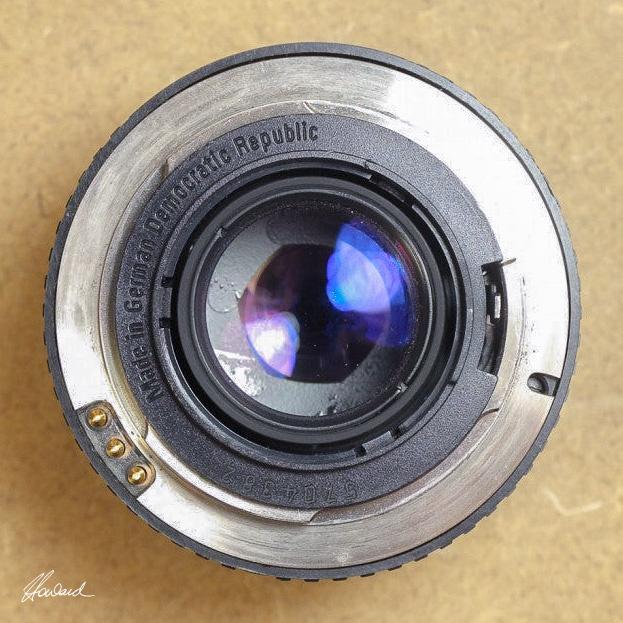
Praktica Bayonet PB Mount
Only used on Praktica B series camera bodies, Praktica PB lenses are easy to identify, with just three round electronic contacts in a row, and usually with a ring of plastic in the centre.
Zeiss made some optics for this mount and are worth looking out for - the prices they can be found for tend to be quite reasonable.
Other Mounts
Naturally there are other lenses from less popular systems not covered in this guide, and from other size cameras such as medium and large formats. Unusual mount 35mm lenses are fairly uncommon but are out there – these include Mamiya ZE mount, Exakta mount, Sigma SA mount, various proprietary mounts for cameras, such as the Canon EE camera, Nikkorex, Contaflex, etc.
If you come across a lens you need help to identify, you are more than welcome to get in touch with me and ask.
Well, actually...
If you've spotted something not quite right in this article, feel free to drop me a message.